A Thousand Small Decisions: How Gradual Brand Drift Quietly Fragments Your Visual Identity
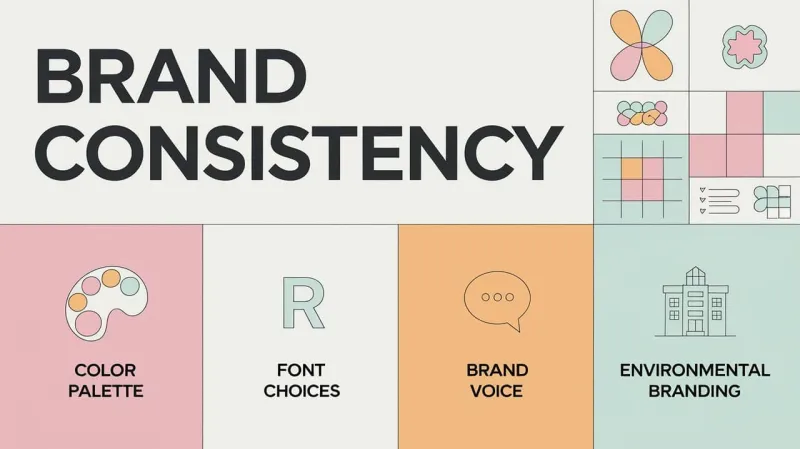
Photo: fragmented brand identity design consistency business strategy, via platongraphics.com
There is a particular kind of brand crisis that never makes headlines. No executive announces it. No press release acknowledges it. It does not arrive with the urgency of a failed product launch or a public relations incident. Instead, it materializes slowly—almost imperceptibly—through the accumulated weight of a thousand small design decisions made in isolation, without coordination, and without consequence in the moment they were made.
This is brand drift. And for a significant portion of mid-sized American businesses, it is already underway.
The Anatomy of Accumulation
Consider a scenario that will feel familiar to many marketing and operations teams. A regional sales manager needs a presentation deck on short notice and asks an internal coordinator to pull something together quickly. The coordinator uses a slightly older logo file—the one saved locally from two years ago—and selects a font that reads cleanly on slides but was never part of the official brand system. The deck goes out. The deal closes. Nobody flags the inconsistency.
Six months later, the company's digital team launches a new landing page for a seasonal campaign. Under deadline pressure, they pull brand colors from a screenshot rather than the official hex codes. The result is a shade of blue that is close—but not quite right. Meanwhile, the customer service department has been generating PDF materials using a template built before the last minor logo refresh. And the company's LinkedIn banner still features the tagline that was retired eighteen months ago.
None of these decisions, in isolation, constitutes a crisis. Each one is defensible. Each one was made under real constraints by people trying to move quickly and serve the organization. But taken together, they represent something that design strategists call design debt—a compounding liability that accrues interest in the form of customer confusion, diluted brand recognition, and eroded market credibility.
Why Fragmentation Is Harder to Detect Than It Appears
The insidious quality of brand drift is that it tends to be invisible from the inside. Teams see their own outputs in isolation. The sales department reviews the deck they produced. The digital team evaluates the landing page against its own performance metrics. The customer service team receives positive feedback on their PDF materials. Nobody is looking at the full picture simultaneously—and that gap in perspective is precisely where incoherence takes root.
External audiences, however, experience a brand holistically. A prospective customer might encounter your company first through a Google display ad, then visit your website, then receive a follow-up email, and finally review a proposal document. If each of those touchpoints reflects a subtly different visual vocabulary—different type weights, inconsistent color applications, competing logo treatments—the cumulative effect is a brand that feels unreliable, even if no individual asset is technically poor in quality.
Research in consumer psychology consistently supports what experienced brand strategists already know: visual consistency correlates directly with perceived trustworthiness. When a brand looks like a unified entity across contexts, customers extend it more credibility. When it looks like a loosely affiliated collection of materials, skepticism fills the gap.
A Diagnostic Framework for Identifying Design Debt
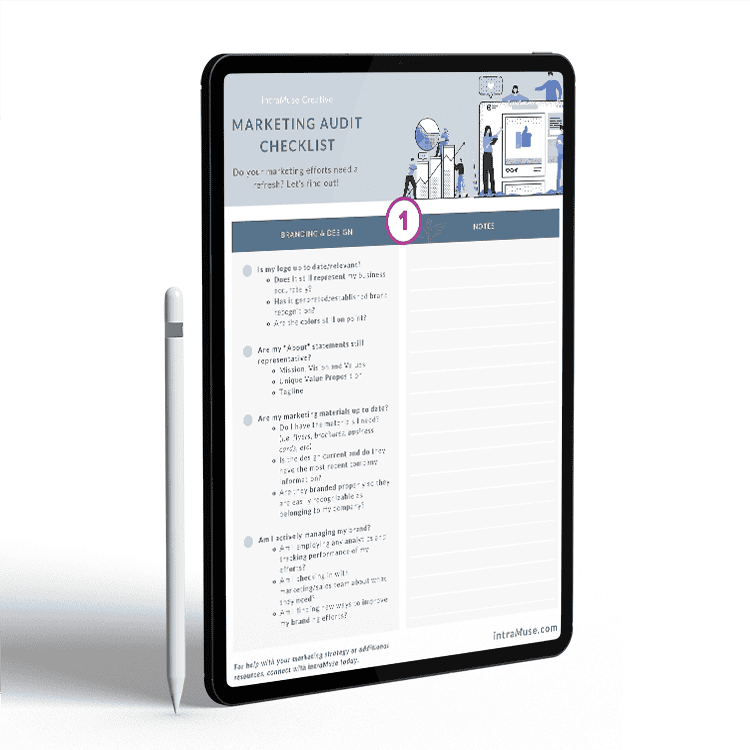
Before any remediation strategy can be developed, organizations need an honest inventory of where fragmentation has occurred. The following audit framework is designed to surface design debt systematically, without requiring a full brand overhaul as the immediate next step.
1. Conduct a Cross-Channel Visual Sweep Gather representative samples from every customer-facing touchpoint: website, social media profiles, email templates, sales collateral, trade show materials, physical signage, product packaging, and any partner co-branded assets. Print them out or display them simultaneously on a single screen. Visual inconsistencies that are invisible in isolation become immediately apparent in direct comparison.
2. Audit Your Asset Libraries Identify how many versions of your logo are currently in circulation—both internally and externally. Survey team members across departments to determine where they source brand files. If the answer varies widely, or if multiple file versions exist without clear version control, you have a structural problem that will continue generating drift regardless of how well-intentioned individual contributors are.
3. Map Decision-Making Ownership For each major brand touchpoint, identify who currently has authority over design decisions. In many organizations, this map reveals that brand stewardship is diffuse to the point of being effectively unmanaged. When everyone owns design, no one does.
4. Measure Deviation from Core Standards Using your official brand guidelines as the benchmark, evaluate each asset against the documented standards for color, typography, logo usage, imagery style, and tone. Assign a simple rating—compliant, minor deviation, significant deviation—to each item. The resulting picture will tell you both the severity and the distribution of your design debt.
5. Identify the Source Patterns Debt rarely accumulates randomly. Look for patterns: Which departments generate the most deviations? Which channels are most inconsistent? Are problems concentrated in a particular time period, suggesting a gap in onboarding or guideline communication? Understanding the source patterns is essential to designing interventions that address root causes rather than symptoms.
Practical Strategies for Maintaining Coherence Without Creative Stagnation
The goal of design debt remediation is not to impose a rigid uniformity that stifles creative evolution. Brands that never adapt visually become stale. The objective is managed consistency—a state in which the core visual identity remains coherent while accommodating legitimate variation and deliberate growth.
Centralize Your Asset Infrastructure Invest in a shared digital asset management (DAM) system that gives every team member access to current, approved brand files. Tools like Brandfolder, Bynder, or even a well-organized Google Drive with strict version control can eliminate the most common source of accidental drift: outdated files used in good faith.
Build Modular Brand Systems, Not Just Style Guides Static PDF brand guidelines are insufficient for organizations operating across multiple channels and departments. A modular brand system—one that provides pre-approved templates, component libraries, and flexible design modules—gives non-designers the tools to produce on-brand materials without requiring specialized expertise or design team approval for every output.
Establish a Lightweight Review Cadence A quarterly brand consistency review, conducted by a small cross-functional team, can catch emerging drift before it becomes entrenched. This need not be a lengthy process. A structured two-hour review against the audit framework outlined above is sufficient to identify and address incremental deviations.
Treat Brand Onboarding as a Recurring Practice New hires are not the only audience for brand education. As brand systems evolve, existing team members need updated guidance. Consider a brief annual brand refresher—delivered as a short internal presentation or an updated reference document—that keeps the entire organization aligned on current standards.
Create a Deliberate Change Protocol Not all brand evolution is problematic. The issue is unplanned, uncoordinated change. Establish a clear process for how intentional brand updates are approved, communicated, and implemented across all touchpoints simultaneously. When change is deliberate and managed, it strengthens a brand. When it is accidental and piecemeal, it fragments it.
The Cost of Inaction
For organizations that choose to defer action on design debt, the trajectory is predictable. Fragmentation deepens. The cost of eventual remediation—whether through a phased realignment or a full rebrand—increases. And in the interim, the brand continues to work against itself in market, undermining the return on every dollar invested in marketing, sales, and customer experience.
The more productive framing is this: design consistency is not a cosmetic concern. It is a strategic asset with measurable implications for customer trust, competitive differentiation, and long-term brand equity. Treating it with the same rigor applied to financial controls or operational processes is not excessive—it is simply good business.
At DesignBB, we work with organizations across the United States to identify design debt early, build the systems that prevent its recurrence, and develop visual identities robust enough to remain coherent across every channel, team, and year that follows. The brands that hold together are the brands that endure.